
Gum problems tend to creep up quietly. One day everything seems fine. Then there’s a bit of blood on the toothbrush. Then some sensitivity. Then a dentist is saying words like “gum disease” and “deep cleaning” and “bone loss.” The frustrating part is that most gum problems are preventable. The daily habits that protect gum health aren’t complicated. They just need to actually be done, consistently, and done correctly. Dental hygiene for gum health is the foundation of keeping teeth for life. And it starts with understanding what’s actually happening in the mouth every day.
Here’s what this blog covers:
- Why gum health matters more than most people realise
- The daily habits that make the biggest difference
- Common mistakes that quietly cause gum damage
- When professional hygiene support is needed
- How Honeyfields supports patients with gum care
Why Gum Health Is More Important Than Most People Think
Teeth get most of the attention. People worry about cavities, whitening, and alignment. But the gums are what hold the teeth in place.
Gum disease, or periodontal disease, is the leading cause of tooth loss in adults in the UK. And it starts with something that’s genuinely reversible if caught early: gingivitis.
Gingivitis is inflammation of the gums caused by plaque build-up at the gum line. The early signs are bleeding when brushing, redness, and mild swelling. Most people ignore these as normal. They’re not.
Left untreated, gingivitis progresses to periodontitis. At that stage, the infection goes below the gum line, affects the bone supporting the teeth, and causes permanent damage. That’s the stage that requires serious treatment.
Strong dental hygiene for gum health practices stop this progression long before it gets that far.
Daily Brushing Habits That Actually Protect the Gums
Most people brush their teeth. The issue is how it’s being done.
Use a soft-bristled toothbrush. Medium or hard bristles cause gum recession over time. They scrub away gum tissue rather than cleaning it. A soft brush used with proper technique does the job without damaging the gums.
Angle the brush at 45 degrees to the gum line. The goal isn’t just cleaning the tooth surfaces. Plaque accumulates at and just below the gum line. Angling the brush toward the gums and using gentle circular motions cleans that area without aggressive scrubbing.
Brush for two full minutes. Most people brush for 45 seconds to a minute. Two minutes is the minimum needed to clean all tooth surfaces and the gum line properly. A timer or an electric toothbrush with a built-in timer removes the guesswork.
Don’t rinse with water immediately after brushing. This is one of the most commonly overlooked instructions. Rinsing washes away the fluoride in toothpaste before it can work. Spit, don’t rinse. Or if rinsing is preferred, use a fluoride mouthwash instead of water.
Replace the toothbrush every three months. Worn bristles are significantly less effective. A toothbrush that looks frayed is already past its useful life.
Flossing and Interdental Cleaning: The Part Most People Skip
Brushing alone doesn’t reach the spaces between teeth. That’s where plaque builds up undisturbed and where gum disease often starts.
Flossing daily is the standard recommendation, but interdental brushes are often more effective and easier to use correctly, particularly for people with larger gaps between teeth or with bridgework or implants.
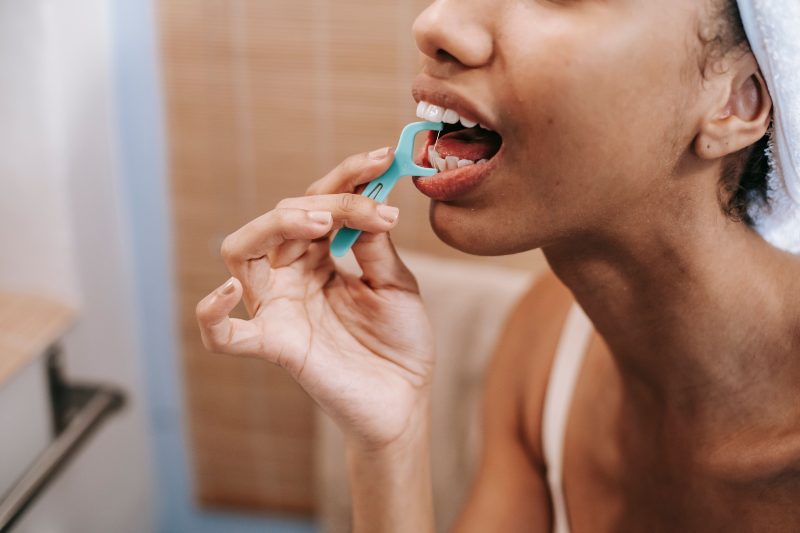
When flossing, the technique matters. The floss should be curved around each tooth in a C-shape and moved gently beneath the gum line, not just snapped between teeth. Aggressive flossing can damage the gum tissue it’s supposed to protect.
Daily oral hygiene habits that include consistent interdental cleaning reduce gum inflammation significantly. For many patients who start flossing consistently, the bleeding at brushing that felt normal for years stops within a few weeks.
Preventing Bleeding Gums: What the Blood Is Actually Telling
Blood when brushing is a signal, not a normal occurrence.
Healthy gums don’t bleed from gentle brushing. Bleeding gums indicate inflammation, which means plaque or tartar is causing an immune response in the gum tissue.
The instinct is sometimes to brush more gently to avoid the bleeding. That’s counterproductive. Gentle but thorough cleaning is what reduces the inflammation that causes the bleeding. Avoidance allows the plaque to build up further.
If gums continue bleeding after two to three weeks of consistent, thorough brushing and interdental cleaning, that’s the point to see a dental hygienist. The underlying cause might need professional attention, including the removal of calculus (hardened tartar) that can’t be removed at home.
Plaque and Bacteria Control: What’s Happening Between Brushing Sessions
Plaque is a biofilm that forms on teeth continuously. Within minutes of brushing, bacteria start recolonising the tooth surfaces. Within 24 hours, if not disturbed, the biofilm thickens.
This is why daily cleaning matters so much. The 24-hour window is the key. Plaque that’s disrupted every 24 hours doesn’t have the chance to become the dense, calcified tartar that causes serious gum damage.
Mouthwash can support but not replace mechanical cleaning. An antibacterial mouthwash can reduce bacterial levels temporarily, but it doesn’t remove plaque from tooth surfaces the way brushing and flossing do.
Long-term oral health care is built on daily mechanical disruption of plaque. Everything else is supplementary.
Oral Care Routine Improvement: Building Habits That Actually Stick
Most people know they should floss. Most people don’t floss consistently. The gap between knowing and doing is where gum health suffers.
A few approaches that help:
Keep interdental cleaning tools visible. Floss or interdental brushes sitting on the bathroom shelf are used more consistently than ones stored in a drawer.
Stack the habit. Brushing already happens twice a day for most people. Attaching interdental cleaning to the evening brush session creates a trigger that already exists.
Use the right tool. If standard flossing feels difficult or uncomfortable, interdental brushes or a water flosser might be more sustainable as a daily habit.
Track consistency for a month. Building a new habit takes time. Tracking daily for four weeks builds the pattern until it becomes automatic.
When Professional Dental Hygiene for Gum Health Support Makes a Difference
Home habits are essential but they’re not the whole picture.
Professional dental hygiene advice from a qualified hygienist addresses what home care can’t reach. Calculus that’s built up below the gum line can only be removed professionally. Areas that consistently accumulate more plaque due to tooth position or restoration shape can be identified and addressed.
A professional hygiene appointment also provides personalised guidance. The hygienist can see where home cleaning is working well and where it’s missing, and give specific advice for that person’s mouth rather than generic instructions.
For patients with active gum disease, professional cleaning at the appropriate frequency is part of the treatment plan. For patients with healthy gums, regular maintenance appointments keep them that way.
How Honeyfields Supports Patients with Gum Health
At Honeyfields, we understand that dental hygiene for gum health is the foundation of long-term oral health, and we support patients at every stage of that journey.
Our dental hygiene team provides thorough professional cleaning, personalised home care guidance, and ongoing support for patients managing gum disease or working to maintain healthy gums after treatment.
We work with patients on the daily habits that make the most difference, because the work between appointments is what determines long-term outcomes.
Whether the goal is addressing bleeding gums, managing existing gum disease, or simply establishing a proper routine for the first time, we’re here to help.
Contact Honeyfields today to book an appointment.
Final Thoughts
Dental hygiene for gum health isn’t a complicated subject. The habits that make the biggest difference are known, accessible, and achievable for most people.
When professional support is needed, working with a team that genuinely understands gum health makes a significant difference.
At Honeyfields, that’s exactly what we provide.
FAQs
How often should a patient with a history of gum disease see a dental hygienist?
The frequency depends on the severity of the patient’s gum disease history and current gum health status. Many patients with a history of periodontal disease benefit from appointments every three to four months rather than the standard six-month interval. A dentist or dental hygienist will recommend the appropriate maintenance frequency based on individual assessment.
Can gum recession caused by previous gum disease be reversed with better oral hygiene?
Gum tissue that has receded due to gum disease cannot regenerate through improved home care alone. However, better oral hygiene can stop or significantly slow further recession. In some cases, surgical treatments are available for significant gum recession. Maintaining excellent daily hygiene is essential regardless of whether surgical intervention is pursued.
Is there a link between gum disease and wider health conditions?
Research has found associations between periodontal disease and conditions including cardiovascular disease, type 2 diabetes, and respiratory conditions. The relationship is complex and still being studied. What’s clear is that the chronic inflammation associated with gum disease has systemic effects beyond the mouth, which is one more reason why addressing gum health is genuinely important for overall wellbeing.